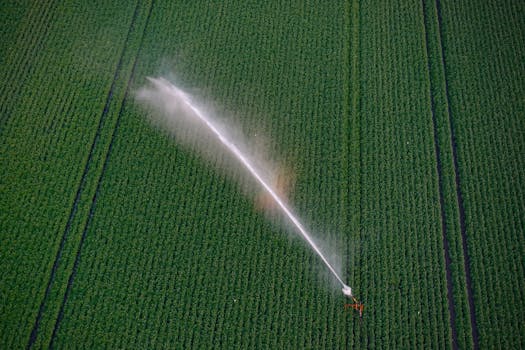
Did you know that agriculture accounts for roughly 70% of global freshwater withdrawals? That’s a staggering figure, and it underscores the critical importance of how we manage water for our crops and landscapes. In this era of increasing water scarcity and climate uncertainty, staying ahead of irrigation technology news isn’t just about being informed; it’s about being proactive. It’s about making smarter decisions that boost yields, conserve precious resources, and ultimately, safeguard our future. Forget the hype; let’s dive into what’s truly making a difference.
Decoding the Data Deluge: AI is Reshaping Irrigation Strategies
The integration of Artificial Intelligence (AI) into irrigation is no longer science fiction; it’s a practical reality. We’re seeing AI move beyond simple weather forecasting to offer truly predictive capabilities.
Predictive Analytics for Precision: Imagine an AI system that analyzes soil moisture, plant stress indicators (like leaf temperature and canopy cover), and microclimate data to predict precisely when and how much water each zone needs. This isn’t just about avoiding over or under-watering; it’s about optimizing for peak plant health and yield.
Automated System Adjustments: The real game-changer is AI’s ability to not only predict but also to act. Connected irrigation systems can now automatically adjust watering schedules based on these AI-driven insights, eliminating human error and ensuring consistent, optimal hydration.
Identifying Hidden Issues: AI can also be trained to spot anomalies in water flow, pressure drops, or equipment malfunctions that might otherwise go unnoticed, preventing costly damage and water loss.
Actionable Tip: If you’re managing a larger operation, start exploring platforms that offer AI-powered irrigation scheduling. Even a pilot program on a small section of your land can provide invaluable data and demonstrate the ROI. For smaller gardens, look for smart controllers that integrate basic AI forecasting.
The Rise of IoT: Connecting Every Drop to the Network
The Internet of Things (IoT) is the nervous system for modern irrigation. By embedding sensors throughout your system and landscape, you gain unprecedented visibility.
Real-Time Monitoring: Think beyond basic soil moisture probes. We’re talking about sensors that measure salinity, nutrient levels, and even root-zone temperature. This granular data, streamed directly to your device, allows for immediate intervention.
Remote Control and Management: Is the forecast suddenly changing? Did you forget to adjust a zone before heading out of town? IoT-enabled systems put control literally at your fingertips. You can remotely start, stop, and modify irrigation schedules from anywhere.
Water Usage Auditing: IoT sensors provide precise, verifiable data on water consumption. This is invaluable for compliance, budgeting, and identifying areas where water might be being wasted inefficiently.
Actionable Tip: When evaluating new irrigation components or controllers, prioritize those with robust IoT capabilities. Look for systems that offer open APIs or integrations with other farm management software to maximize data utilization.
Beyond Water: The Smart Role of Nutrient Management in Irrigation News
What’s often overlooked in the conversation about irrigation technology news is its symbiotic relationship with nutrient delivery. Drip irrigation and sophisticated fertigation systems are becoming increasingly integrated.
Targeted Nutrient Application: Instead of broadcasting fertilizers, modern systems allow for precise application of nutrients directly to the root zone. This means less fertilizer is lost to runoff or leaching, saving money and reducing environmental impact.
Optimizing Growth Cycles: By precisely timing nutrient delivery alongside optimal watering, you can significantly influence plant growth stages, from vegetative development to flowering and fruiting.
Soil Health Monitoring: Some advanced IoT sensors can also monitor soil chemistry, allowing for dynamic adjustments to both water and nutrient inputs to maintain optimal soil health over time.
Actionable Tip: If you’re using drip irrigation, investigate the capabilities of your system for fertigation. Even simple injection systems can make a significant difference in efficiency and plant response compared to traditional broadcast methods.
Low-Tech Innovation: Solutions for Every Scale
It’s easy to get caught up in the high-tech marvels, but often, the most impactful irrigation technology news involves simpler, yet highly effective, innovations.
Advanced Drip Emitters: Manufacturers are constantly improving drip emitters for better uniformity, clog resistance, and pressure compensation, ensuring every plant gets the intended amount of water.
Smart Valves and Controllers: Even without full AI integration, advanced controllers offer sophisticated scheduling options, rain delay features, and zone-specific programming that can dramatically improve efficiency for the average homeowner or small farm.
Water Harvesting and Reuse: News on improved rainwater harvesting systems, greywater recycling technologies, and efficient on-farm pond management are critical for sustainable irrigation, especially in drought-prone regions.
Actionable Tip: Don’t discount the impact of upgrading older components. Replacing worn-out sprinkler heads with more efficient models or installing a simple battery-powered smart valve can yield immediate water savings.
The Future is Efficient: What’s Next in Irrigation Tech
Looking ahead, the trajectory of irrigation technology news points towards even greater automation, data integration, and resource optimization.
Edge Computing for Irrigation: Instead of relying solely on cloud processing, we’ll see more “edge computing” where data analysis and decision-making happen directly on the irrigation controller or sensor, leading to faster response times.
Bio-Integrated Systems: Future systems might incorporate biological sensors or even microbial agents that communicate plant needs more directly, moving irrigation from a purely mechanical process to a more ecosystem-aware one.
* Enhanced Water-Saving Materials: Innovations in materials science could lead to more efficient irrigation pipes, emitters that reduce evaporation, and soil amendments that retain moisture more effectively.
Wrapping Up: Making Smart Irrigation Your Reality
Staying informed about irrigation technology news is about recognizing patterns and opportunities. AI and IoT are powerful tools, but their true value lies in how they empower us to make better, more informed decisions on the ground. Whether you’re a large-scale agricultural producer or a dedicated home gardener, the principles remain the same: monitor, analyze, and act with precision. The latest advancements aren’t just about saving water; they’re about cultivating resilience, boosting productivity, and ensuring a sustainable future for all our green spaces. The time to integrate these innovations into your watering practices is now.